
Rubbish Skip Hire: Choose the Best Bin Size for a Clean-Up
If you have a clean up, reno, move out, or yard job, rubbish skip hire can save tip runs and make waste disposal and rubbish removal much easier.
The main challenge involves choosing the right bin size, understanding waste rules, checking driveway access, and making sense of quote details. A good skip bin hire service also helps with logistics like choosing the right size and understanding waste rules.
A proper bin hire plan helps you choose the right skip bins and avoid overfilling. It also keeps banned items out and helps you work around council bins, a recycle bin, or a green waste bin when they are not enough for the job.
What is rubbish skip hire and how does it work?

Rubbish skip hire is a service for managing waste. You choose a skip bin size, and a local team drops it off at your address. You fill it, and when you are done, they pick it up and manage the waste disposal.
Skip bin hire works better than repeat tip runs for bigger loads. It suits move-outs, renovations, site cleanups, landscaping, or business rubbish removal when you want everything gone in one go.
Most skip hire bookings last from a few days to a week. If you finish early, just let the team know, and they can collect the skip sooner. If you need more time, you can ask about extending your bin hire to keep your project on track.
Collected waste goes to a licensed facility where sorting and recycling are priorities. Clean green waste, timber, and metals are separated to help reduce landfill. Mixed rubbish is sent to the correct disposal or recycling facility.
How to choose the right skip bin size for your job
Choosing the right skip bin for your rubbish skip hire keeps your clean up on track and your costs down. You want a bin that fits your waste, suits your access, and helps you avoid the headache of overflow or extra charges. Here is how to choose the right skip bin for your hire.
Step 1: Sort your waste type
Start by working out what your main waste type is. Most jobs fall into general rubbish, green waste, or building and renovation waste.
General rubbish covers old furniture, carpets, toys, household clutter, and move-out junk.
Green waste includes garden cuttings, grass, branches, and palm fronds.
Building waste means timber, tiles, bricks, plaster, and rubble from renovations or trade jobs.
Keep each load as clean as you can. Mixing green waste with general rubbish or adding bricks to a household skip can mean wasted space and more cost. If you are unsure where an item fits, ask your bin hire team before you book.
Step 2: Estimate your waste volume
Use simple comparisons to guess your rubbish volume.
A standard box trailer load is about 1m³.
A household wheelie bin fits roughly 0.2m³.
A standard ute tray is around 1m³.
Count your loads. If you think your rubbish will fill three trailers, you likely need at least a 3m³ skip bin. For bigger jobs like renovations or a full home declutter, skip bins in the 6m³ to 12m³ range may be the best fit. When in doubt, it is often better to size up so you do not risk overfilling.
Step 3: Check your site access
Before you book skip bins, make sure you have the space for a safe delivery and pickup.
Measure driveway width and check for tight gates or sharp turns.
Look for slopes, uneven ground, low branches, or overhead wires.
Clear out parked cars and any obstacles before the truck arrives.
If you have tricky access, let your skip bin hire provider know early. They can help you choose a bin that fits both your waste and your site, so the truck can get in and out without problems.
Step 4: Allow a buffer and load safely
Never book a bin that only just matches your estimate. Always allow a little extra space, as rubbish often takes up more room than you expect. Overfilling the bin above the rim can lead to extra charges or a refused pickup.
Keep your load safe and stable as you fill it.
Spread heavy items across the bottom of the bin.
Break down big furniture or boxes to save space.
Stack flat items neatly to use the space better.
This approach helps you avoid extra charges and ensures you can fill your skip safely. If you follow these steps, your rubbish skip hire will be faster, smoother, and more cost-effective. If you need help picking a bin size, ask your local team for advice before you lock it in.
Skip bin sizes: 3m³, 4m³, 6m³, 8m³, 12m³

Picking the right skip bin size makes your rubbish skip hire simple and keeps your clean-up on track. Here is a quick guide to help you match your job to the right skip bin hire option. Every bin suits different waste types and volumes, so you can avoid extra costs and wasted space.
Bin Size | Best For | Capacity (Approx.) |
3m³ | Small declutters, minor garden waste, garage clear-outs. | 3 trailer loads |
4m³ | Bathroom/laundry tidy-ups, small renos, tenancy cleanouts. | 4 trailer loads |
6m³ | Medium renovations, decking projects, office clear-outs. | 6 trailer loads |
8m³ | Large renos, landscaping waste, builder site clean-ups. | 8 trailer loads |
12m³ | Big clean-outs, deceased estate clearance, light demolition. | 12 trailer loads |
Smaller bins like the 3m³ and 4m³ are great for household jobs and fit easily into most driveways. The 6m³ is a popular all-rounder, while the 8m³ and 12m³ bins handle major projects and bulky building waste. Always check your site access before booking a larger bin to ensure the truck can get in and out safely.
Rubbish skip hire costs: what affects price and quotes
Rubbish skip hire prices are determined by several key factors. The main factors are waste type, weight, hire period, delivery timing, and placement. Understanding these details helps you avoid unexpected fees and book the right skip bin for your cleanup.
Waste type and weight limits
The waste you load into your skip bin makes the biggest difference to the quote. General rubbish, green waste, and construction debris each have different rates. Mixed rubbish or heavy waste like bricks, tiles, or soil often costs more because of disposal fees and weight limits.
Overfilling or adding extra weight can result in extra charges or a refused pickup. Keep the load below the rim and stick to your agreed waste type to keep your hire low cost.
Hire period, timing, and placement
How long you need your skip bin and when you book can change the price. Urgent delivery, weekend hires, or extensions past the standard period can sometimes cost extra. Where you want the bin also matters.
Easy driveway access helps keep prices down. Street placements or tricky sites may need council permits or extra care from the driver. Clear access and a safe spot help you avoid delays and extra fees.
To keep costs down, pick the right size, keep waste below the rim, and follow the waste type rules. Ask upfront if you are unsure. That way, your skip hire will be more straightforward and cost-effective.
What you can put in skip bins for rubbish removal
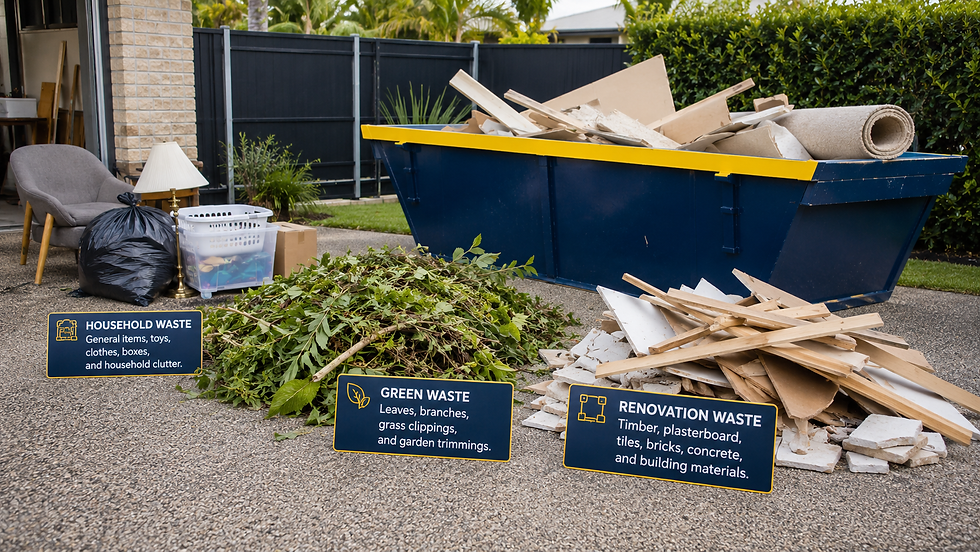
Skip bins make rubbish removal easy for all sorts of clean-ups. Most bins can take general household rubbish, renovation waste, and green waste if you keep the load clear of banned items. Here is a quick guide for what goes in.
General household waste: You can load in old furniture, bagged clutter, toys, carpets, and other light rubbish. These items are common in move-outs, declutters, and tenancy changes.
Renovation and building waste: Timber, gyprock, tiles, and cupboards are accepted in most bins. For heavier materials, check if the skip bin hire has weight limits. Bricks, concrete, and soil can fill up a bin fast.
Green waste: Branches, leaves, grass, and palm fronds fit in a green waste bin. Do not mix in general rubbish or plastics. This keeps the load suitable for recycling and helps keep the price down.
Recyclables: Metals and cardboard can go in the bin. It is best to separate them where possible to help with waste disposal and recycling. If you are not sure about an item, just ask before you load up.
What can’t go in a rubbish skip (avoid extra fees)
Keeping your rubbish skip hire safe and cost-effective starts with knowing what not to load. Putting the wrong items in skip bins can lead to extra charges, refused pickup, or even legal issues. Some materials must be disposed of through other channels and cannot go in a standard bin hire, particularly certain items that are tracked by government authorities.
Prohibited items include:
Food scraps and liquids
Paint, chemicals, and oils
Batteries, gas bottles, fire extinguishers, and aerosols
Tyres, medical waste, sharps, and e-waste
Strict rules for asbestos:
Asbestos is never allowed in general skip bins. Only licensed contractors can book an EPA-licensed asbestos skip bin. You must arrange this service before delivery to keep the job safe and legal.
If you are unsure about anything, check before you load. It is always better to ask than to risk extra fees or a refused pickup. Following clear waste rules protects you and helps keep your cleanup on track.
Where to place a skip bin safely (driveway vs street)

The safest spot for a skip bin is a flat, firm driveway or private area where the truck can deliver and collect easily. A driveway offers the best access and keeps the skip bin close to your work. This helps with rubbish removal and keeps the area tidy.
Protect your surface by placing timber boards or thick cardboard under the bin’s contact points if needed. This simple step can help avoid marks on concrete or pavers. This is especially useful if you expect heavier waste or a large skip bin hire for a big clean-up.
Stay clear of footpaths, garages, shared driveways, and busy sightlines. Never block pedestrian walkways or place bins where children and cars cross paths. Keep at least one metre of clearance on each side of the bin.
If you must use the street, check the council bin rules and get approval before you book. Many councils require permits for skip bins on public land, such as a nature strip or roadway. Plan ahead to avoid delivery delays or fines.
For any bin placement, leave turning room for the truck. Check for low branches or wires and keep cars well clear. Good access ensures a straightforward pickup and drop-off, and helps avoid extra charges for failed collections.
Delivery and pickup: timing, access, and hire periods

To ensure a smooth delivery, prepare the area before your skip bin arrives. Move cars out, open gates, and clear any low branches or obstacles. This helps the truck place your bin safely and on time.
Let us know if you have tricky access, a steep driveway, or a tight turning space. If you need the bin on the street, check the council bin rules or permit needs before you book. Good communication about access helps ensure a straightforward delivery and pickup, and avoids delays.
Standard skip bin hire periods often cover most clean-ups. If you finish early, you can contact the provider to request an earlier pickup. If you need more time, it is often possible to extend the hire period.
For easy rubbish removal, always keep waste below the rim and within the agreed waste type. Overfilling or putting in banned items like food scraps or chemicals can mean extra charges or a refused pickup.
For certain jobs, official paperwork to track the waste can be arranged. This is often required for builders, property managers, and licensed contractors to show they have followed regulations. Clear planning keeps your clean up on track from delivery to pickup.
Finish the clean-up faster with Moreton Bay Skip Bins
A well-planned rubbish skip hire can simplify your clean-up project. Match the skip bin size to your waste type and how much space you have for delivery. Always follow the waste rules and keep banned items like food scraps, paint, or batteries out of the bin to avoid extra charges.
Place your bin safely on flat, firm ground and keep the area clear so the truck can collect it easily. A local provider familiar with North Brisbane, Bribie Island, and the wider Moreton Bay region can offer advice on local requirements and help you avoid common mistakes like overfilling or blocked access.
Contact us to book a bin or get advice for your project.
FAQs about rubbish skip hire
What skip size do I need for my clean-up?
Match the bin to your job and access. Small declutters or green waste often fit 3m³ or 4m³ skip bins. Medium renovations or rubbish removal may suit 6m³ or 8m³. Choose a 12m³ bin for big clean-outs or building waste.
How much does rubbish skip hire cost and what changes the price?
Cost depends on skip size, waste type, weight, hire period, and pickup timing. Overfilling or booking a tricky location can add fees. Clear advice upfront helps you understand the final cost.
What can and can’t go in the skip?
General waste, building waste, and green waste are fine if separated. Banned items include food scraps, paint, chemicals, gas bottles, batteries, and asbestos.
How fast can it be delivered, and when is pickup?
Delivery times vary, so it is best to book in advance. Standard hire periods apply, but you can often request an early pickup or extra days if needed.
Where can I put the skip, and do I need approval?
Driveways or private property work best. Street placement may need council approval. The truck also needs clear access and overhead space for safe drop-off and collection.

